 Maximus Dev Tech
Free 3D Titanic survival game
MDT Titanic
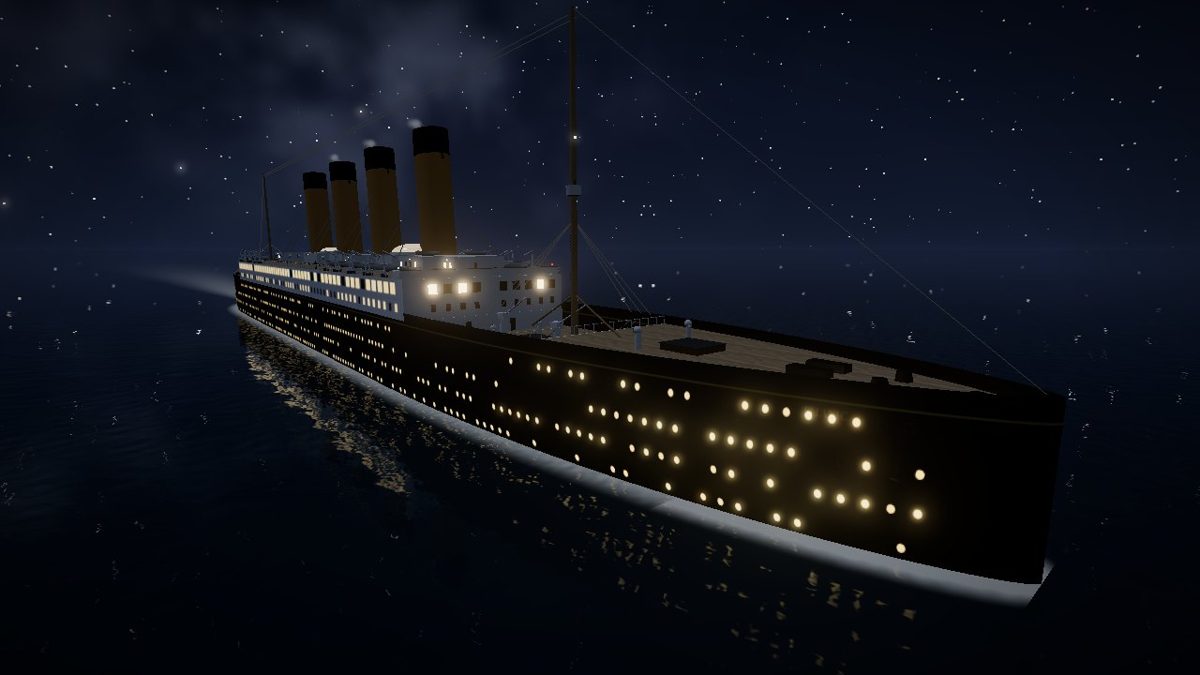
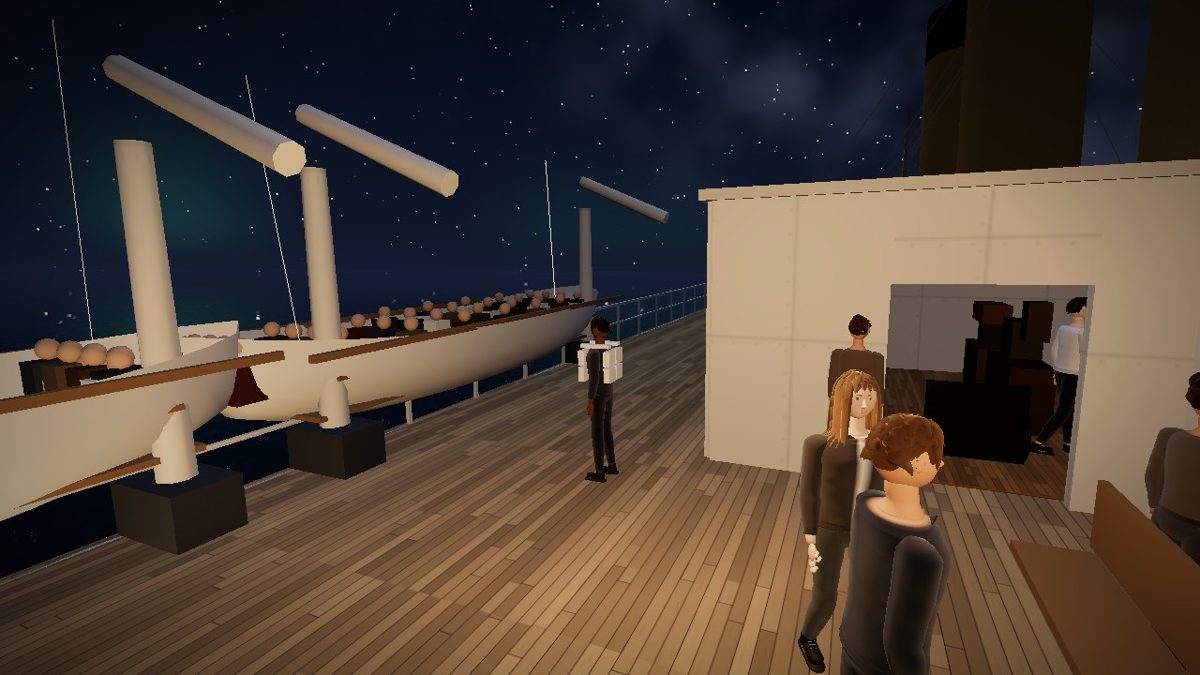
MDT Titanic is a free 3D Titanic game you play in your browser, made by Maximus Dev Tech. It puts you aboard RMS Titanic on the night of 14 April 1912, built at full size: all 269 metres of her, ten decks from the boiler rooms to the Boat Deck. Explore her, then survive the sinking.
About MDT Titanic
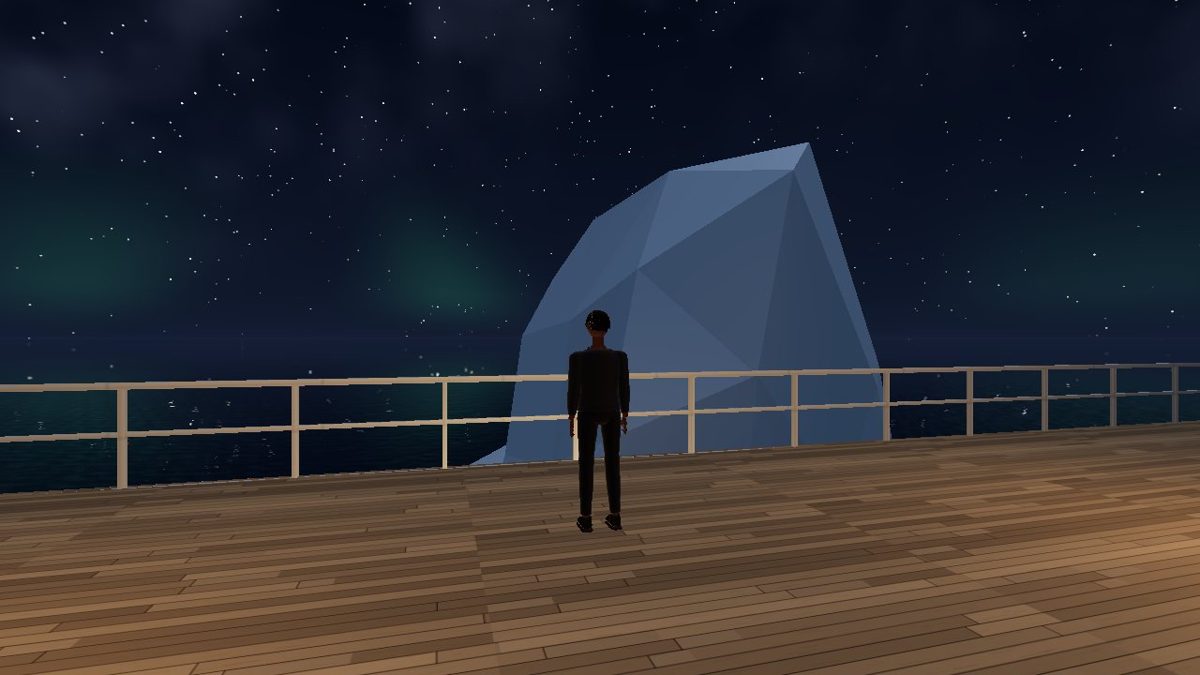
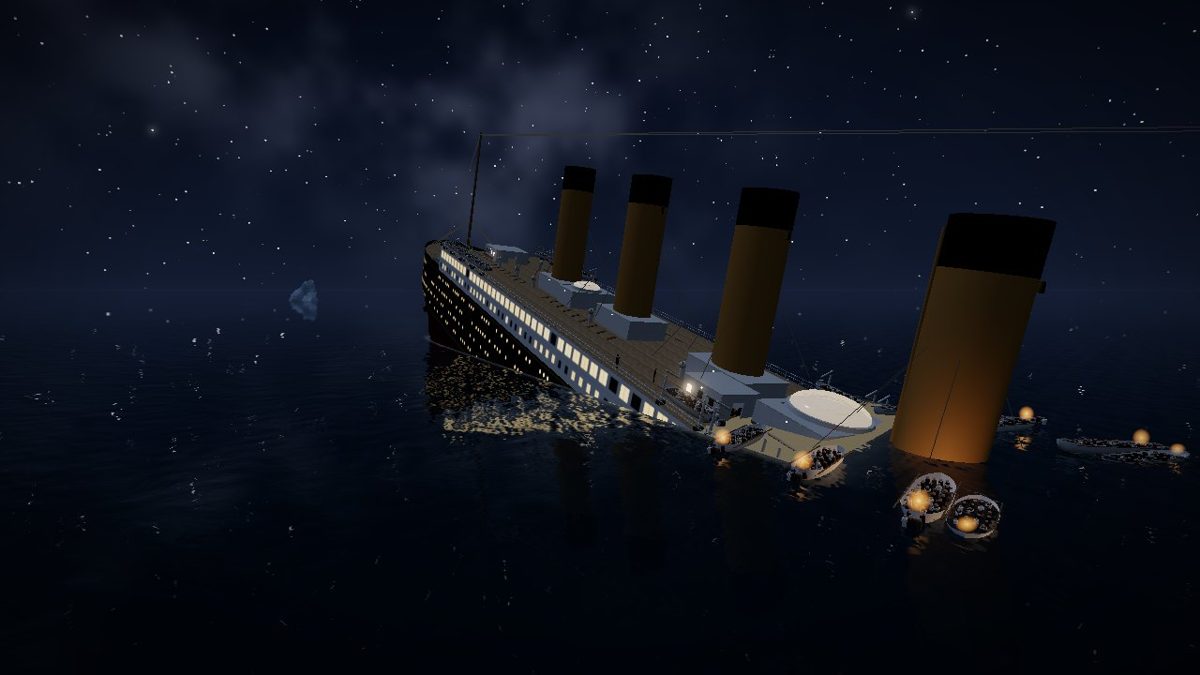
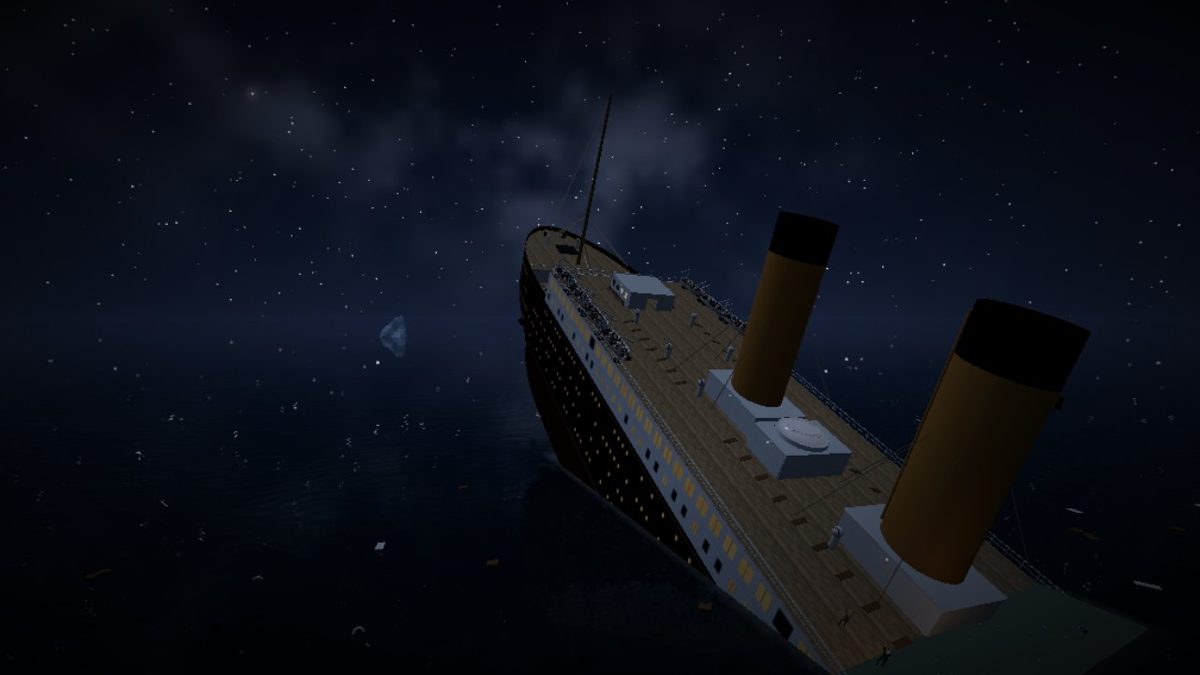
Explore the ship while she steams through a calm, starlit sea. Then, at 11:40 pm, she strikes an iceberg. Over the next 25 minutes (two hours and forty minutes of real time) she sinks the way she really did: the bow goes down, the lifeboats leave one by one, the lights fail, she breaks in two and the stern stands straight up before it goes under. Your job is to survive the night.
It is a survival game with no monsters and no weapons: just the water rising deck by deck, the tilt, the cold and the clock. Everything follows the real night, from the lookouts' three bells to the last boat, and every famous room you find adds its true history to your Ship's log. You can read that history below.
How to play
- Pick your ticket on the title screen: first, second or third class. It decides where you are when the night begins and where your cabin is.
- Move with WASD or the arrow keys (the stick on a phone), drag to look around and scroll or pinch to zoom. Tap the eye button at the top (or press V) to see through your own eyes, and again for a view from the sky over the sea while you play.
- Follow the goal at the top of the screen (a gold marker shows the way): find out what happened, fetch your lifebelt, get to the Boat Deck and try for a place in a lifeboat. Early on the Boat Deck you can let the time pass until the boats are ready.
- As the deck tilts you start to slide. Hold on with F, or the hand button on a phone.
- When the boats are gone, get to the stern. Hold the rail as it rises, then swim for a piece of floating wreckage and wait for a boat to come back.
- Walk into the famous rooms to add them to your Ship's log and read their history.
What's in it
- The whole ship at 1:1 scale: 269 m long, ten decks, four funnels, masts, the crow's nest and 20 lifeboats
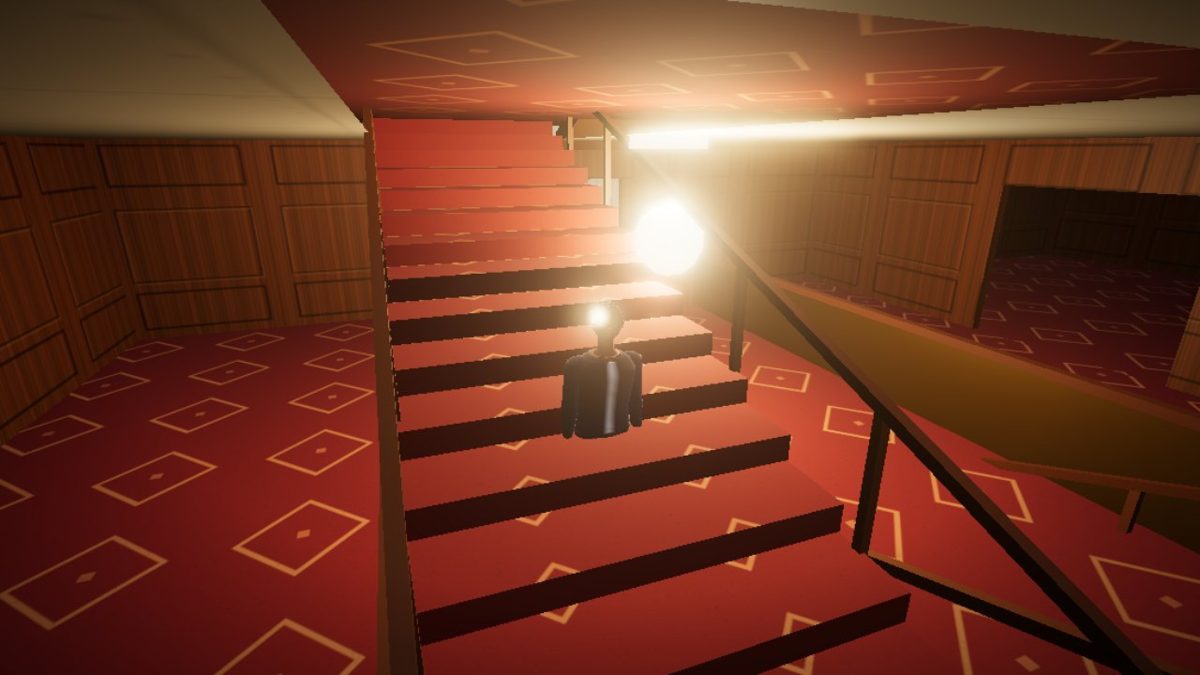
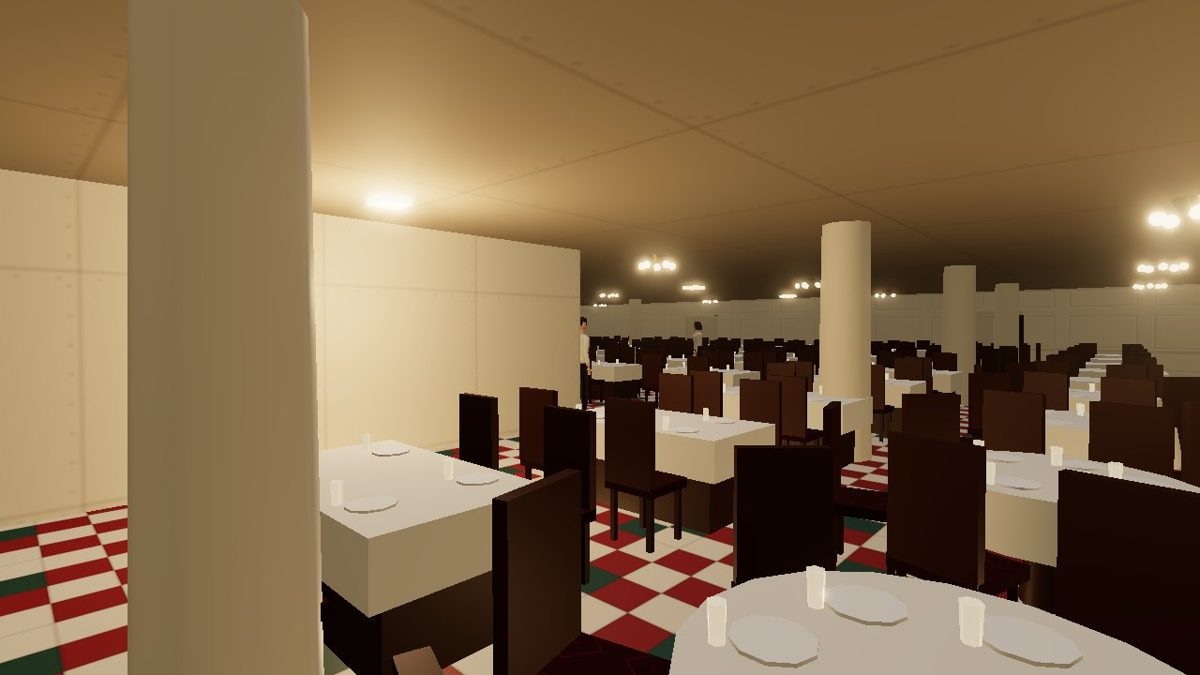
- The Grand Staircase under its glass dome, the First Class Dining Saloon, the Lounge, the Smoking Room, the Verandah Café, the Café Parisien, the gym, the swimming bath and the Turkish bath
- Third class, Scotland Road, the post office, the cargo hold, six boiler rooms and the engines, plus hundreds of cabins
- The iceberg grinding along her starboard bow, spray flying and ice showering onto the forward well deck
- The sinking as it really happened: the bow settling, the list, the bridge going under, the forward funnel falling, the lights failing, the break between the third and fourth funnels and the stern rising until it stands up
- The sea getting in compartment by compartment: the water rises in each room, then spills over the bulkheads and along E deck, with watertight doors sliding shut ahead of it
- Signs on the walls pointing to the nearest stairs up and down, and signs over every staircase
- Lifeboats lowered at their real times, distress rockets, steam roaring from the funnels, passengers and crew on board who talk as you pass, from calm chat about New York to "Women and children first!"
- A starlit, moonless night and a flat calm sea that reflects the ship's lights
- Free explore: walk the whole ship with no iceberg, for as long as you like
- Escape the flood: start in Boiler Room 6 as the iceberg breaks in and escape six flooding rooms, escape-room style, all the way to the stern, with a time for every room and a hard mode with no marker
- Watch her sink: the whole night as a film, with a free camera you fly anywhere, views inside her as the rooms fill and of the ice tearing her steel, and the clock in your hands (pause, slow motion, jump to any moment)
- Climb to the crow's nest, listen to the wireless room send CQD and SOS, and look for the northern lights
- Faces of the night: meet five real people from the story where and when they were, from Captain Smith on the bridge to Isidor and Ida Straus by Lifeboat 8
- Little stories from the night: a lost girl to bring to her mother at the boats, a ship's lights on the horizon that never came, Collapsible B floating upside down
- A Ship's log of more than 40 rooms with their history, 15 medals to win, and an In memory page for everyone who sailed on her
- Photo mode: freeze any moment, fly the camera anywhere and save the picture, in colour or in a 1912 look
- At the end, your night told back to you: what you did and when, from the shudder at 11:40 pm to the last
The night of 14 April 1912, hour by hour
The game follows the real timeline of the sinking. This is what happened, and when it happens to you aboard.
- 11:40 pm
- Lookout Frederick Fleet sees an iceberg dead ahead and rings the crow's nest bell three times. First Officer William Murdoch orders the wheel hard over. She turns, but the ice scrapes along her starboard bow and opens her forward compartments to the sea.
- Around midnight
- Thomas Andrews, who designed her, goes below with Captain Edward Smith to see the damage, and tells him she will sink within about two hours.
- Soon after midnight
- The captain orders the lifeboats uncovered. In the wireless room Jack Phillips and Harold Bride begin calling for help, CQD and then the new SOS. The Carpathia, 58 miles away, turns north towards them.
- 12:45 am
- Lifeboat 7, the first to go, is lowered from the starboard side, far from full. The first distress rocket goes up.
- 1:40 am
- The forecastle, her bow, goes under. The water climbs the decks, compartment by compartment.
- 2:05 am
- Collapsible D, the last boat lowered from the davits, leaves. More than 1,500 people are still aboard.
- 2:15 am
- The sea reaches the Boat Deck. Collapsibles A and B wash off the roof of the officers' quarters, B upside down, and the forward funnel falls.
- About 2:18 am
- The lights fail. She breaks in two between the third and fourth funnels, and the stern rises until it stands almost straight up.
- 2:20 am
- The stern goes under. Hundreds of people are left in water close to freezing.
- About 4:10 am
- The Carpathia arrives and picks up the first lifeboat. About 710 people are saved; about 1,500 are lost.
The Ship's log: the real rooms of the Titanic in the game
Find a famous room in the game and its history goes into your Ship's log. These are all 48 of them, deck by deck, from the top of the ship to the bottom, with the history the game tells you.
Boat Deck
- The crow’s nest
- Lookouts Frederick Fleet and Reginald Lee were up here, 29 metres above the sea. They had no binoculars: the key to the locker had been left behind. At 11:39 Fleet saw the iceberg, rang the bell three times and telephoned the bridge.
- Wheelhouse
- The ship was steered from here. When the lookouts rang three bells, First Officer Murdoch ordered the wheel hard over and the engines reversed. She turned, but not enough.
- Wireless Room
- The Marconi wireless room. Jack Phillips and Harold Bride sent the distress call, CQD and then the new SOS, for two hours. The Carpathia, 58 miles away, heard it and raced north through the ice.
- Grand Staircase
- The top of the Grand Staircase, under a dome of wrought iron and glass. Light from the sky came down five decks.
- Gymnasium
- The gym had an electric camel, an electric horse, rowing machines and bicycles. On the last night its instructor, T. W. McCawley, stayed among his machines.
- Aft Staircase
- A second first class staircase, near the fourth funnel. The ship broke apart close to here.
- Second Class Entrance
- Second class had its own staircase and lift. Its accommodation was as good as first class on many other liners.
- The Boat Deck
- The Boat Deck carried 20 lifeboats with room for 1,178 people. There were 2,224 on board. The law then based lifeboats on a ship’s size, not on how many people she carried.
A Deck
- Grand Staircase, A Deck
- Honour and Glory Crowning Time: the carved clock on the landing showed two figures over the dial. The staircase was oak, with wrought iron and gilt balustrades.
- Reading and Writing Room
- A quiet white room with a bay window, for writing letters home. Passengers posted them in the ship’s own post office.
- First Class Lounge
- The Lounge was carved in the style of the palace of Versailles, in polished walnut. Here first class read, played cards and listened to the ship’s musicians after dinner.
- First Class Smoking Room
- Dark mahogany, mother-of-pearl inlay and stained glass windows lit from behind. It was the gentlemen’s room: Thomas Andrews, the ship’s designer, was last seen here.
- Verandah Café (Palm Court)
- The Verandah Cafés had trellised walls, climbing ivy and wicker chairs: like sitting in a garden at sea. Children of first class often played here.
B Deck
- Parlour Suite
- The two parlour suites on B deck had a sitting room, bedrooms, a bathroom and their own private promenade along the ship’s side. A one-way crossing in one cost about £870, more than a hundred thousand pounds today.
- À la Carte Restaurant
- An extra restaurant run by Luigi Gatti and his Italian and French staff, where first class could dine whenever they liked, paying for each dish.
- Café Parisien
- A Parisian pavement café at sea, with ivy on trellises and wicker furniture, looking out through big windows. It was new on this ship.
- Second Class Smoking Room
- Second class had its own smoking room with oak panelling and leather chairs.
- The forecastle
- The bow: the anchor cranes, capstans and the foremast. It was the first part of the ship to go under, at about 1:40 am.
- The poop deck
- The very stern, the highest point of the ship as she went down. Hundreds gathered here at the end. The chief baker, Charles Joughin, rode the stern down and survived hours in the freezing water.
C Deck
- Crew Mess (Forecastle)
- Under the forecastle deck were the crew’s mess rooms and galley. Most of the 900 crew lived forward, close to their work.
- Purser’s Office
- The Purser’s Office kept passengers’ valuables in its safe and sold tickets for the Turkish bath and the squash court.
- Barber’s Shop
- The barber also ran a little shop selling souvenirs, postcards, toys and pennants of the ship.
- Second Class Library
- The second class library had sycamore panelling, silk curtains and glass-fronted bookcases.
- Third Class General Room
- Third class had its own common room, panelled in pine, with benches, tables and a piano. Many families travelling to new lives in America spent the evening here.
- The forward well deck
- After the collision, ice from the berg lay scattered here. Some third class passengers kicked chunks of it about like footballs, not yet knowing what had happened below.
D Deck
- Grand Staircase, D Deck
- At the foot of the staircase on D deck was the Reception Room, where first class gathered before dinner.
- Third Class Open Berths
- Single men in third class slept forward, in big open berths with rows of bunks, close to the bow where the ship first struck.
- Reception Room
- Before dinner, first class met in the Reception Room at the foot of the Grand Staircase. On Sunday night the band played here.
- First Class Dining Saloon
- The largest room afloat: 35 metres across, seating 554 people at once, with white Jacobean panelling and leaded windows. The last dinner on 14 April had ten courses.
- Galley and Pantry
- The galleys served first and second class from the middle of the ship. The chief baker, Charles Joughin, was in charge of the bread.
- Second Class Dining Saloon
- Second class dined at long tables on swivel chairs, under oak panelling. It sat 394 at a time.
- Hospital
- The ship had a hospital with its own operating room and dispensary, run by Dr William O’Loughlin.
E Deck
- Grand Staircase, E Deck
- The Grand Staircase went down to E deck. Below this, the ship was all working spaces.
- Scotland Road
- The crew called this wide alleyway Scotland Road, after a busy street in Liverpool. It ran most of the ship’s length, and firemen used it to reach the boiler rooms.
F Deck
- Swimming Bath
- One of the first swimming pools on a ship: 9 metres long, filled with heated sea water. It cost a shilling a swim.
- Turkish Bath
- The Turkish bath was decorated like a room from the Ottoman empire, with blue and green tiles, gilded beams, bronze lamps and carved couches.
- Third Class Dining Saloon
- Third class ate in white enamelled saloons at long tables with swivel chairs: better food than many passengers had at home.
G Deck
- Post Office
- Five postal clerks sorted mail at sea: 3,364 sacks of it. When the water came in they carried the sacks up to drier decks, and all five were lost.
- Squash Court
- A squash court two decks high, with a spectators’ gallery. A professional was on hand to play with you.
The Orlop deck
- Forward Cargo Hold
- The holds carried cases of goods, cars, a jewelled copy of the Rubaiyat and much more. The water reached here within minutes of the collision.
The bottom of the ship (Tank Top)
- Boiler Rooms 1, 2, 3 and 4
- Each boiler room had five huge coal-fired boilers. 176 firemen shovelled about 600 tonnes of coal a day to keep her at speed.
- Boiler Room 5
- The iceberg’s damage reached this far: the water rose here more slowly, while the stokers drew the fires.
- Boiler Room 6
- The iceberg opened this room to the sea. Leading Stoker Fred Barrett saw water burst through the side and escaped as the watertight door came down.
- Reciprocating Engine Room
- Two four-cylinder triple-expansion engines, each the size of a house, drove the wing propellers. The engineers stayed at their posts to keep the lights and pumps running until the very end: none of them survived.
- Turbine Engine Room
- Steam left over from the two engines spun a 420-tonne turbine here, which turned the centre propeller.
Faces of the night: five real people you can meet
In the game you can find five people who were really aboard, where and when they were that night, and speak to them.
- Captain Edward Smith
- Edward Smith, 62, the White Star Line’s most senior captain, was to retire after this voyage. He ordered the boats uncovered soon after midnight and stayed with his ship. He was lost.
- Isidor and Ida Straus
- Isidor Straus, a co-owner of Macy’s, was offered a seat because of his age and refused to go before other men. Ida gave her place in Lifeboat 8 to her maid, Ellen Bird, and stayed with him. They were last seen together on deck. Both were lost.
- Margaret Brown
- Margaret Brown of Denver helped others into the boats and was then put into Lifeboat 6, where she took an oar and urged the crew to go back for people in the water. She survived, and was later called “the Unsinkable Molly Brown”.
- Thomas Andrews
- Thomas Andrews of Harland & Wolff designed her. After the collision he told the captain she would sink within two hours, then spent the night urging people into lifebelts and boats. A steward last saw him alone in the First Class Smoking Room. He was lost.
- Charles Joughin
- Charles Joughin, the chief baker, threw deck chairs overboard as floats, then rode the stern down. He was in the water for about two hours and survived; he believed the drink he had taken kept out the cold.
Titanic lifeboat launch times
She carried 20 lifeboats, with room for 1,178 of the 2,224 people on board. In the game each one leaves at its real time (the times that night are approximate, from the survivors' accounts). Odd-numbered boats were on the starboard side, even-numbered on the port side.
- Lifeboat 7
- 12:45 am, starboard
- Lifeboat 5
- 12:55 am, starboard
- Lifeboat 3
- 1:00 am, starboard
- Lifeboat 8
- 1:00 am, port
- Lifeboat 1
- 1:05 am, starboard
- Lifeboat 6
- 1:10 am, port
- Lifeboat 16
- 1:20 am, port
- Lifeboat 14
- 1:25 am, port
- Lifeboat 9
- 1:30 am, starboard
- Lifeboat 12
- 1:30 am, port
- Lifeboat 11
- 1:35 am, starboard
- Collapsible C
- 1:40 am, starboard
- Lifeboat 13
- 1:40 am, starboard
- Lifeboat 15
- 1:41 am, starboard
- Lifeboat 2
- 1:45 am, port
- Lifeboat 4
- 1:50 am, port
- Lifeboat 10
- 1:50 am, port
- Collapsible D
- 2:05 am, port
- Collapsible A
- 2:15 am, starboard (floated off)
- Collapsible B
- 2:15 am, port (floated off)
Questions
Is MDT Titanic free?
Yes. MDT Titanic is completely free, with nothing to buy.
Do I need to download anything?
No. MDT Titanic runs in your web browser, so there is nothing to install.
Does it work on my phone?
Yes. MDT Titanic works on phones, tablets and computers. On an iPhone you can also add it to your home screen from Safari's share menu.
Do I need an account?
You can play straight away. Sign in with a free Maximus Dev Tech account to keep your Ship's log on every device and collect MXC: 250 for surviving and more for every famous room you find.
Is there a free Titanic game I can play online?
Yes. MDT Titanic is a free Titanic game that runs in your web browser on a computer, tablet or phone, with nothing to download. You explore the full-size ship on the night of 14 April 1912, then try to survive the sinking.
Can you walk around the whole Titanic?
Yes. The whole ship is built at real size, all 269 metres and ten decks, from the boiler rooms and Scotland Road to the Grand Staircase and the Boat Deck. Free explore lets you walk her with no iceberg for as long as you like.
Can you survive the Titanic sinking in the game?
That is the goal. The lifeboats leave at their real times, but, as for so many that night, a seat in one is hard to come by. Hold on at the stern as she rises, then swim for a piece of floating wreckage and stay alive in the freezing water until a boat comes back.
Does the Titanic break in half in the game?
Yes. She sinks the way she really did: bow first, with a list, the forward funnel falling and the lights failing, then she breaks in two between the third and fourth funnels and the stern stands straight up before it goes under.
Is MDT Titanic historically accurate?
Her size, her ten decks and the timeline of the night are true to history: the iceberg at 11:40 pm, the lifeboats at their real launch times and the end at 2:20 am. The rooms are where they roughly were rather than an exact copy of her plans, and each famous room carries its real history in the Ship's log.
How long does the sinking take in the game?
About 25 minutes of play for the two hours and forty minutes between the iceberg and the end. Early on you can let the time pass on the Boat Deck, and Watch her sink plays the whole night as a film, with pause, slow motion and a free camera.
Is it good for learning about the Titanic?
Yes. The Ship's log holds the history of more than 40 rooms, you can meet five real people from the night where and when they were, and the In memory page remembers everyone who sailed on her. It is a respectful game: no monsters, no weapons and nothing made up about the people aboard.